


Infection prevention with a long-term effect
Our skin and mucous membrane antiseptics
Skin antisepsis prior to surgical procedures is one of the most basic measures in infection prevention. Products based on 2% alcoholic chlorhexidine are ideal for skin disinfection in surgical procedures.

Skin disinfection
Studies on the prevalence of Healthcare-Associated Infections (HAIs) show that the vast majority of these HAIs are caused by microorganisms that are already present, either permanently or temporarily, on the patient's own skin. This is particularly relevant in the case of invasive percutaneous procedures, such as vascular access, or in surgical interventions, where the skin barrier is deliberately opened, allowing these microorganisms to enter the bloodstream and other sterile tissues.
One way to reduce the likelihood of infections associated with these procedures is to reduce the total concentration of microorganisms on the skin as a whole and, in particular, in the areas close to where such incisions and insertions are to be made, before they take place and during the procedure itself.
Antiseptics are the appropriate disinfectants for this function on living tissue and must therefore meet certain requirements:
- demonstrably and sufficiently reduce microbial contamination rates on the skin
- do so without causing iatrogenic, topical, or systemic damage
- be practical and easy to use, in order to promote adherence to protocols
- whenever possible, have a persistent effect on the skin, because some procedures can be prolonged (such as vascular catheterizations).

Chlorhexidine and skin antisepsis
Over the last few decades, chlorhexidine has established itself as the global gold standard in intact skin antisepsis, in almost all its variants, for good reasons:
• Broad spectrum of antimicrobial activity for microorganisms of interest.
• Good skin tolerability in general, and almost no systemic absorption.
• Resistant to inactivation, even in the presence of abundant organic matter.
• Its strong cationic charge causes it to bind persistently to the stratum corneum, giving it a residual effect, and even a cumulative effect when reapplied periodically.
That is why Vesismin Health by schülke offers chlorhexidine digluconate in its formulations most recommended in international guidelines:
- 4% soap solutions for antiseptic washing with rinsing.
- 2% impregnated mitts for antiseptic washing without rinsing.
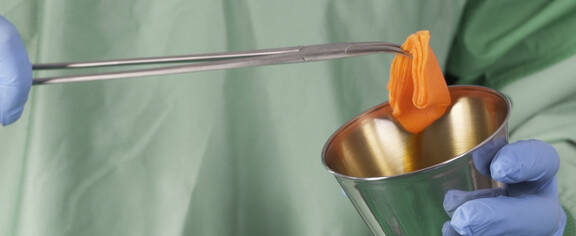
- 2% solutions in 70% isopropyl alcohol for local antisepsis in vascular access or surgical procedures, in strict compliance with the updated recommendations of Bacteriemia Zero or PRIQ-O, e.g. The intense orange color allows visualization and monitoring of the disinfected area.
- 2% aqueous solutions for local antisepsis in alcohol-intolerant skin areas (e.g., percutaneous and invasive procedures in gynecology, obstetrics, or neonatology). Also available with intense orange colour.
Our products

Bactiseptic Orange
Bactiseptic is a product formulated with a solution of 2% alcoholic chlorhexidine (70% of Isopropyl alcohol), developed for general antisepsis of the skin. The orange dye ensures a distinct view of the application area.BactiScrub
4% soapy chlorhexidine antiseptic gel, for antiseptic cleansing of patients’ skinBactiseptic Orange wipes
Individual wipes impregnated with the solution Bactiseptic Orange, a solution of 2% alcoholic chlorhexidine (70% of Isopropyl alcohol).Bactiseptic Clear
Bactiseptic is a product formulated with a solution of 2% alcoholic chlorhexidine (70% of Isopropyl alcohol), developed for general antisepsis of the skin.Bactiseptic Clear Wipes
Individual wipes impregnated with the solution Bactiseptic, a solution of 2% alcoholic chlorhexidine (70% of Isopropyl alcohol).


Important notice
This site is intended for healthcare professionals. By entering this site, you are confirming that you are a healthcare professional.