








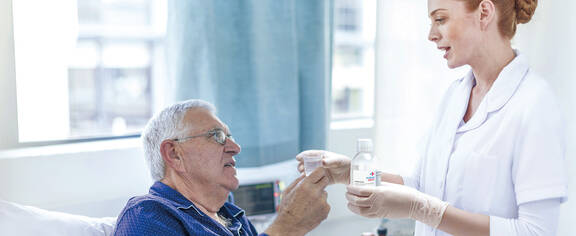
Antiseptic mouthwash for patients
The use of antiseptic mouthwashes is recommended in order to be able to care for patients even during a phase of reduced oral hygiene. They help prevent gingivitis and periodontitis and can reduce the risk of infections. Find out more about oral antiseptics in the following article.
Get the information you need with just one click:
Ensuring oral care with antiseptic mouthwashes
As part of patient hygiene, oral care is an important component in achieving a temporary reduction in the bacterial load in the oral cavity. Germs can lead to gum disease (gingivitis, periodontitis) and infections, especially in patients with risk factors.1 Antiseptic mouth wash can help to reduce the bacterial and levorucidal germ load.2
Prevent risks with antiseptic mouthwashes
The first bacteria start to colonize again just two hours after brushing your teeth.3 Over time, other, mostly harmless bacteria are added and form a matrix of sugar and proteins - a biofilm (plaque) develops. About two days later, potentially pathogenic germs settle.4 Careful dental care helps to inhibit the colonization of germs. If oral hygiene is limited, the use of an antiseptic mouthwash is an alternative to mechanical tooth cleaning.
Without comprehensive oral care (tooth brushing and dental hygiene), a dental plaque consisting of hardened bacterial deposits develops within 72 hours.4 This leads to changes in the oral flora from originally Streptococcus and Actinomyces spp. to aerobic Gram-negative bacteria.5 As a result, health consequences such as gum disease and infections can occur, so that planned operations may have to be postponed. 6
Gingivitis
Periodontitis
Oral thrush
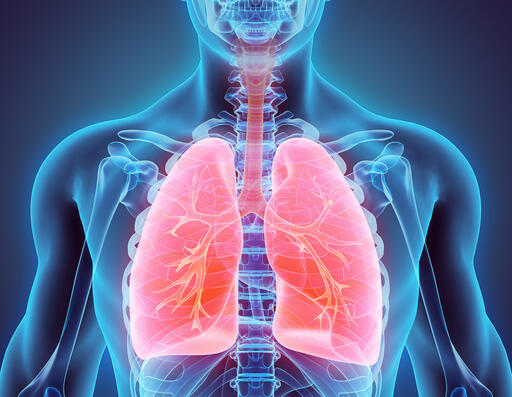
Prevention of respiratory infections

Optimal oral hygiene through tooth brushing and dental care is not always feasible in care facilities or on hospital wards. This can lead to gum disease, oral thrush and serious pneumonia. In Germany, ventilator-associated pneumonia (VAP) is one of the most common hospital infections.13 In the case of VAP, hospital stays can be extended by 6-9 days14,15 and additional costs of up to €30,000 per patient can be incurred.16,17,18,19,20
To prevent nosocomial ventilator-associated pneumonia, the KRINKO guideline "Prevention of nosocomial ventilator-associated pneumonia" recommends regular oral care with antiseptic substances with proven efficacy, among other things.21
1 Kriebel et al., 2018, Front.
2 SK3 guideline (long version); Domestic chemical biofilm management in the prevention and treatment of gingivitis, AWMF registry number: 083-016, status: November 2018, amendment: December 2020 https://www.awmf.org/uploads/tx_szleitlinien/083-016l_S3_Haeusliches-chemisches-Biofilmmanagement-Praevention-Therapie-Gingivitis_2021-02.pdf 3 Dhir 2013, Journal of Indian Society of Periodontology.
4 Munro CL, Grap MJ. Oral health and care in the intensive care unit: state of the science. Am J Crit Care 2004 Jan;13(1):25-33.
5 Berry AM, Davidson PM. Beyond comfort: Oral hygiene as a critical nursing activity in the intensive care unit. Intensive Crit Care Nurs 2006 Jun.
6 S2k guideline (short version); dental sanitation before heart valve replacement, AWMF registry number: 007-096, as of April 201
7 "How does gingivitis develop and how can it be treated?" DAZ.online, https://www.deutsche-apotheker-zeitung.de/news/artikel/2019/11/01/wie-kommt-es-zu-einer-gingivitis-und-wie-kann-sie-therapiert-werden. Accessed July 15, 2022.
8 "Fünfte Deutsche Mundgesundheitsstudie (DMS V) -Kurzfassung Institut der Deutschen Zahnärzte im Auftrag von Bundeszahnärztekammer und Kassenzahnärztlicher Bundesvereinigung". Bzaek.de, https://www.bzaek.de/fileadmin/PDFs/dms/Zusammenfassung_DMS_V.pdf. P.21. Accessed July 14, 2022.
9 AWMF- Arbeitsgemeinschaft der Wissenschaftlichen Medizinischen Fachgesellschaften e.V.. S3 Guideline (short version) "Domestic chemical biofilm management in the prevention and treatment of gingivitis." As of November 2018
10 "Periodontitis". Health Knowledge Foundation, https://www.stiftung-gesundheitswissen.de/wissen/parodontitis/hintergrund. Accessed July 18, 2022.
11 "Oral thrush". Christina Trappe, NetDoktor. 09.12.2021. https://www.netdoktor.de/krankheiten/soor/mundsoor/#::text=Mundsoor%20bei%20Erwachsenen%20betrifft%20häufiger,Kortison)%20occurs%20occasionally%20with%20 oral thrush. Accessed 26.08.2022.
12 "Mundsoor bei Pflegebedürftigen". Ramona Rühl. https://www.pflege.de/krankheiten/mundsoor/. Accessed 23.08.2022.
13 Rello, Jordi; Kollef, Martin H.; Diaz, Emili; Rodriguez, Alejandro (2010): Critical Care Infectious Diseases. Dordrecht: Springe
14 Beyersmann J, Gastmeier P, Grundmann H et al (2006) Use of multistate modelsto assess prolongation of intensive care unitstay due to nosocomial infection. Infect Control Hosp Epidemiol 27:493-499.
15 Eber MR, Laxminarayan R, Perencevich EN, Malani A (2010) Clinical and economic outcomes attributable to health care-associated sepsis and pneumonia. Arch Intern Med 170:347-353.
16 Hunter JD: Ventilator associated pneumonia. BMJ 2012, 344: e3325. 10.1136/bmj.e3325.
17 VAN NIEUWENHOVEN, E. BUSKENS, D.C. BERGMANS, F.H. VAN THIEL, G. RAMSAY et J.M. BONTEN, Oral decontamination is cost-saving in the prevention of ventilator associated pneumonia in intensive care units, 2004.
18 R.F. ABIDIA, Oral Care in the Intensive Care Unit : A Review, The Journal of Contemporary Dental Practice, Volume 8, No. 1, January 2007.
19 R. GARCIA, A review of the possible role of oral and dental colonization on the occurrence of health care-associated pneumonia: Underappreciated risk and a call for interventions, AJIC, November 2005
20 R. GARCIA, L. JENDRESKY, L. COLBERT, A. BAILEY, M. ZAMAN et M. MAJUMDER, Reducing Ventilator-Associated Pneumonia Through Advanced Oral-Dental Care: A 48-Month Study, AJCC, July 2009.
21 "Prävention der nosokomialen ventilator-associated pneumonia: Empfehlung der Kommission für Krankenhaushygiene und Infektionsprävention (KRINKO) beim Robert Koch-Institut". Bundesgesundheitsblatt, Gesundheitsforschung, Gesundheitsschutz, Vol. 56, No. 11, 2013, pp. 1578-1590, doi:10.1007/s00103-013-1846-7.