






Can Preventive Washing Reduce ICU Infections?

Discover the evidence behind preventive washing in ICU and hear expert discussion on infection prevention and patient care.
Healthcare-associated infections (HCAIs) remain one of the biggest challenges in modern healthcare — affecting up to 37% of ICU patients [1] and costing the NHS £2.7 billion each year [2].
According to the World Health Organization (WHO), up to 70% of infections can be prevented through effective infection prevention and control [3]. Preventive washing is emerging as one of the simplest, evidence-based steps to help protect patients, reduce antibiotic use, and strengthen infection prevention across hospitals.
To explore this topic further, experts Dr Philipp Walloch and Dr Roger Henderson share their insights in a three-part podcast series, discussing practical, evidence-based measures that make a difference.
Why Infection Prevention in ICU Matters
Critically ill patients are especially vulnerable to infection due to weakened immune systems and invasive procedures [4]. Up to 37% of ICU patients develop an HCAI [1] — increasing the risk of complications, longer stays, and mortality [5].
Key Facts:
- HCAIs affect 7.6% of patients in hospitals [2]
- Cost the NHS £2.7 billion each year [2]
- Cause 834,000 infections and 28,500 deaths annually [2]
- Bloodstream infection prevalence in ICU: 34% [4]
- WHO: IPC measures reduce HCAIs and AMR by 35–70% [3]
The Power of Preventive Washing
A simple, evidence-based step toward safer care. For ICU patients, preventive washing with antiseptic products helps lower the risk of bloodstream infections [6] and multidrug-resistant organisms (MDROs) [7].
Two key approaches
- Targeted decontamination – for patients testing positive for Staphylococcus aureus
- Universal decontamination – for all ICU admissions
Research shows universal decontamination can prevent up to 45% of MRSA infections [8], improving outcomes hospital-wide [9].
A three-part conversation tackling one critical question: can preventive washing reduce ICU infections? In this engaging series, Dr Philipp Walloch and Dr Roger Henderson discuss the global challenge of antimicrobial resistance (AMR), the role of infection prevention, and the evidence supporting antiseptic bathing as a simple, effective strategy for ICU teams.
Each episode explores a vital theme:
- The Connection Between AMR and HCAIs – how resistance and infections go hand in hand.
- Prevention Over Treatment – why every infection prevented avoids another antibiotic course.
- The EFFECT Study – large-scale evidence showing antiseptic bathing reduces bloodstream infections by 17%.
About the Podcast Series
Octenidine: The Proven Alternative
Octenidine-based antimicrobial wash mitts have been shown to:
- Reduce ICU-acquired bloodstream infections and MRSA [6]
- Deliver a 17% reduction in bacteraemia compared to placebo [10]
- Lower antibiotic prescriptions and unwarranted infections [11]
- Improve patient and staff satisfaction through waterless convenience [12]
Octenidine benefits:
- Broad-spectrum antimicrobial action [13]
- No known resistance [10]
- Excellent skin compatibility [14]
- Lasting protection for up to 48 hours [15]
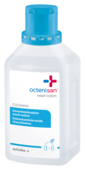
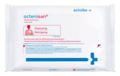
The octenisan® Range
Effective, patient cleansing for infection prevention. The octenisan® range offers octenidine-based products designed for safe, convenient, and clinically proven decontamination in ICU settings.

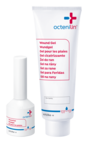
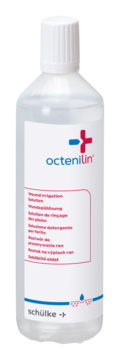
octenilin® wound gel
Wound gel for covering, moistening and cleansing of encrusted, contaminated and chronic wounds as well as burn wounds