



Patient washing that does more

Waterless bathing can support infection prevention, patient dignity and comfort, and a simpler care routine. Explore the evidence and see how different wash mitts can meet different clinical and patient needs.
Prevent more with every wash: A practical guide to waterless bathing in healthcare
Does clean always need water?
Washing is an essential part of patient care. Yet in settings such as critical care, every part of the routine deserves consideration – including the water, equipment and preparation involved.
Hospital water systems and sinks can present infection risks for vulnerable patients.¹ Ready-to-use wash mitts offer a way to cleanse patients without bringing a bowl of water to the bedside. Antimicrobial washing can also form part of a wider infection prevention approach where clinically appropriate.
Choosing the right wash is important. A patient who needs antimicrobial decontamination has different requirements from someone who needs gentle daily care.
Protect. Preserve. Simplify.
Protect patients
Antimicrobial patient washing can support established infection prevention measures. The product and protocol should reflect the patient’s needs and the clinical setting.
Preserve dignity and comfort
A wash with fewer steps can mean less disruption for a patient with limited mobility. A mitt can also help some patients take part in their own care when they’re ready to do so.
Simplify the routine
Ready-to-use mitts remove the need to prepare a bowl, rinse the patient or launder washcloths and towels after use. That can make washing easier to manage for busy teams while reducing the equipment needed at the bedside.

Evidence worth bringing into the conversation
In a large study across intensive care units, daily washing with octenidine-based cloths was associated with a 17% lower risk of developing a primary bloodstream infection during the ICU stay, compared with cloths without octenidine.²
The evidence helps put preventive washing in context. It can play a valuable role within an infection prevention programme, with the benefits varying by product, patient group and outcome measured.
What can waterless bathing look like in practice?
In an adult critical care unit, a planned three-month trial of waterless patient washing was extended to a year following positive feedback. The team replaced bowl-and-water washing with wash mitts, using octenidine-containing mitts for five days in line with the trust’s MRSA protocol, followed by non-antimicrobial mitts.
The evaluation reported 10 minutes saved per patient per day compared with bowl-and-water washing. Staff and patients responded positively, and some patients were able to take part in their own care. No waterborne bacteraemia was recorded during the evaluation.³

The right wash for the right patient
schülke’s waterless bathing range spans antimicrobial washing and gentle daily hygiene. That gives healthcare teams options for different care needs and local protocols.
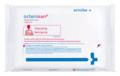
Octenidine-based mitts for whole-body antimicrobial washing, including use in intensive and infection-sensitive settings.

esemtan® wash mitts sensitive
Fragrance-free wash mitts for cleaning and care of intact skin

Unperfumed, pH-skin-neutral mitts for cleansing and caring for intact, sensitive skin as part of daily hygiene.
All are ready to use and require no rinsing. Product choice should follow the patient’s needs, the relevant product information and local clinical protocols.
Care that does more
Prevent more with every wash brings together the evidence, practical considerations and patient care benefits of waterless bathing. It also explains how to choose between antimicrobial washing and gentle daily hygiene.
Interested in the clinical discussion? Listen to our three-part podcast series on preventive washing in ICU.